
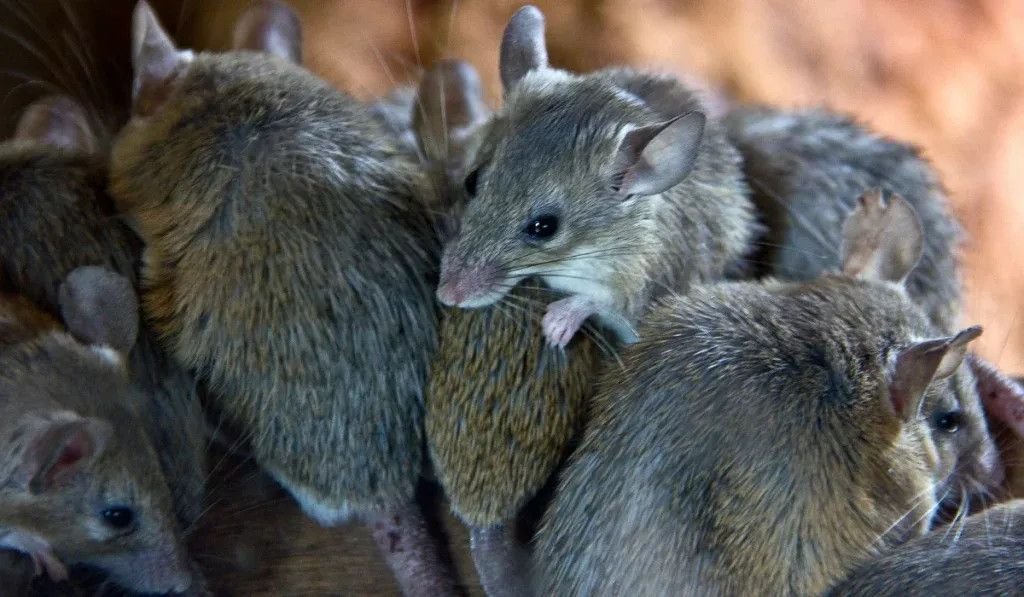
You heard it again. Scratching above the bedroom ceiling, right around sunset. Then the pitter-patter of tiny feet running across the drywall. Mice in the attic are more than an annoyance. They chew wiring, tear up insulation for nests, and leave droppings that can carry hantavirus.
Getting rid of attic mice takes three steps in this exact order: trap every mouse inside, seal every opening they used to get in, and clean up the mess they left behind. Skip any one of these and the problem comes back. Do them in the wrong order and you seal mice inside your attic where they die in the walls. Here is how to do it right.
Why Mice Choose Your Attic
Attics are nearly perfect mouse habitat. They are warm in winter from rising heat. They are dry. They are rarely disturbed by humans. Fiberglass insulation makes ideal nesting material, and the gaps around roof vents, soffits, and chimney flashing provide dozens of entry routes from outside.
Mice do not need a large opening. An adult house mouse can squeeze through a hole the diameter of a dime, roughly a quarter of an inch. If you can fit a pencil through a gap, a mouse can fit through it. Most attics have multiple openings this size around plumbing vent pipes, electrical conduits, and where the roof meets the exterior walls.
Once inside, a single pair of mice can produce 60 offspring in a year. If you have been hearing scratching for months, you almost certainly have more than two mice. You have a breeding population.
Step One: Trap Every Mouse Inside the Attic
Do not seal entry points first. If you block the exits before trapping, mice that are inside when you seal will die in your walls and attic. A decomposing mouse smells for two to three weeks and attracts flies and carpet beetles. Trap first, then seal later.
Snap Traps Are the Most Reliable Method
Old-fashioned wooden snap traps remain the standard for attic mice. They kill instantly and leave the mouse accessible for disposal. Plastic snap traps with a pressure-sensitive trigger pad are easier to set and equally effective.
Place traps perpendicular to walls along known mouse pathways. Mice run along edges, keeping their whiskers in contact with a vertical surface. A trap parallel to the wall gives them two ways to approach it. A trap placed perpendicular with the trigger end against the wall catches them from either direction. Place traps every five to ten feet along the attic perimeter.
Bait with peanut butter pressed firmly into the bait cup so mice have to work at it. A dab on top is too easy to lick off without triggering the trap. Press it in deep. Alternative baits that work well in attics include hazelnut spread, bacon grease, and cotton balls. Nesting females sometimes ignore food but will take soft nesting material.
Bait Stations for Ongoing Control
Tamper-resistant bait stations placed along the attic perimeter provide secondary control. These are plastic boxes containing rodenticide blocks that only mice can access. They work over days, not hours. A mouse eats the bait, returns to the nest, and dies there. This is effective for population reduction but creates the problem of dead mice in inaccessible locations.
Use bait stations as a supplement to snap traps, not a replacement. Snap traps let you remove carcasses. Bait stations let poison work through the colony. Together they cover both immediate kill and population reduction.
Check Traps Daily for the First Week
Check every trap each morning. Remove dead mice wearing disposable gloves and place them in a sealed plastic bag in an outdoor trash can. Reset traps with fresh bait. If a trap has not caught anything in three days, move it to a different location. Mice are creatures of habit but will avoid a trap that has been in the same spot too long without producing food.
Continue trapping until you have gone seven consecutive days without a catch and without hearing activity. A quiet attic for a full week, combined with zero trap activity, is your signal that trapping is complete. If you trap for two weeks and are still catching mice every few days, the entry points are still open and new mice are entering. Move to Step Two immediately in that case. Do not wait.
Step Two: Find and Seal Every Entry Point
Mice enter attics from outside, which means the entry points are on your roof, in your soffits, or where utility lines enter the house. You need to inspect from both inside the attic and outside on the roof or with a ladder.
Inside the Attic: Look for Light and Stains
Go into the attic during daylight with a bright flashlight. Turn off the attic light if there is one. Look for daylight penetrating through gaps. Every pinprick of light is a potential mouse highway. Common locations include where plumbing vent pipes penetrate the attic floor, around recessed light fixtures, at the intersection of roof rafters and exterior walls, and around chimney or furnace flues.
Look for dark, greasy rub marks along rafters and insulation. Mice have oily fur that leaves smudge marks along their regular travel routes. These marks point directly to entry and exit points. Follow them.
Outside Inspection: The Roofline Is the Front Door
Walk around the house with binoculars or climb a ladder for a close look. Check these five locations, which account for the vast majority of attic mouse entries.
Soffit vents where the screen has pulled away or rusted through. Roof vents where the flashing has gaps or the vent cap is missing. The gap where the roof meets the fascia board, especially at corners and valleys. Chimney flashing where mortar has cracked or the metal has separated from the brick. Where the siding meets the foundation line, which mice climb to reach the attic indirectly through wall voids.
Gaps a quarter inch or smaller get silicone caulk or expanding foam sealant. Gaps between a quarter inch and two inches get copper mesh stuffed tightly inside, then sealed over with foam or caulk. Mice will chew through foam alone but will not chew through copper. Gaps larger than two inches need hardware cloth, which is galvanized wire mesh with quarter-inch openings, secured with screws and washers.
Soffit vent screens that are damaged need replacement, not patching. A roll of quarter-inch galvanized hardware cloth costs about fifteen dollars and can cover multiple vents. Cut pieces two inches larger than the opening on each side, secure with a staple gun, and trim the excess.
Step Three: Clean Up the Damage
Mouse droppings, urine, and nesting material in attic insulation are health hazards. According to the CDC, deer mice in particular can carry hantavirus, which becomes airborne when dried droppings and nesting material are disturbed. House mice carry salmonella and lymphocytic choriomeningitis virus. This step is not optional.
Safety Gear: Do Not Skip This
Wear an N95 or P100 respirator, not a dust mask. Wear disposable coveralls with a hood. Wear rubber gloves. Wear goggles. Tape the cuffs of the coveralls to your gloves and boots with duct tape so nothing gets inside. The goal is zero skin contact with contaminated material and zero inhalation of dust from dried droppings.
Remove Contaminated Insulation
Insulation that is heavily soiled with droppings and urine or that has been tunneled through and shredded for nests cannot be cleaned. It must be removed and replaced. Bag it in heavy-duty contractor bags inside the attic. Do not drag loose insulation through the house. Double bag each load and carry it directly outside.
Lightly soiled insulation in areas away from nests can sometimes be left in place if you are certain it has not been contaminated. If in doubt, remove it. Replacement insulation, whether fiberglass batts or blown-in cellulose, costs between one and three dollars per square foot installed. For a typical attic, full insulation replacement runs five hundred to fifteen hundred dollars.
Sanitize All Surfaces
Never sweep or vacuum dry droppings. This aerosolizes virus particles. The CDC protocol is to spray droppings and nesting material with a bleach solution of one part bleach to ten parts water until they are soaking wet. Let them sit for five minutes. Then wipe up with paper towels and dispose in sealed plastic bags.
After all visible material is removed, spray all surfaces in the affected area with the same bleach solution and let air dry. This includes rafters, sheathing, and any hard surfaces. Run a HEPA air purifier in the attic for 24 hours after cleanup if possible.
Replace the insulation with new material. Install it according to the manufacturer’s depth recommendation for your climate zone. While the attic is empty and clean, this is the best time to double-check that all entry points are sealed from the inside as well.
Prevention: Keep Them Out for Good
Mice will try to get back in. They can smell the pheromone trails left by previous generations. The sealing work from Step Two is your primary defense, but add these ongoing measures.
Trim tree branches that overhang or touch the roof. Mice are excellent climbers and will use a branch as a bridge directly to your roofline. Keep branches at least six feet from the roof edge.
Install rodent-proof vent covers on all roof and soffit vents. These are metal screens with quarter-inch mesh that screw into place over existing vents. They cost ten to twenty dollars each and take ten minutes to install with a drill.
Check the attic monthly for the first six months after treatment. Look for new droppings, fresh rub marks, or disturbed insulation. The sooner you catch a reinfestation, the easier it is to stop before breeding begins.
If your attic has persistent reinfestation despite thorough sealing, the mice are entering through a route you have not found. This is the point to call a professional. A wildlife removal specialist with attic experience will find the gap you missed, often within the first fifteen minutes of inspection.
Frequently Asked Questions
Should I use poison bait in the attic?
Only as a supplement to snap traps, never as the primary method. Poison bait in the attic means mice die in wall voids, under insulation, or between floors where you cannot reach them. A dead mouse in an inaccessible location smells for two to three weeks and attracts secondary pests. Use bait stations after trapping has removed most of the population, and only in areas where you can access and remove carcasses if needed.
Will homeowners insurance cover attic mouse damage?
Almost never. Standard policies exclude rodent damage as a maintenance issue. If mice chew through wiring and cause an electrical fire, the fire damage is typically covered, but the rodent infestation and wire damage itself is not. Some insurers offer a rodent damage rider, but it is uncommon. Check your policy or ask your agent.
I only heard one mouse. Can there be just one?
It is possible but unlikely. Mice are social animals that live in groups. A single mouse heard over multiple nights usually means multiple mice, especially in an attic where conditions are ideal for breeding. Set at least six traps the first night. If you catch only one in the first week and hear nothing after, you may have been lucky. If you catch more than one, keep trapping until activity stops for a full week.
Do ultrasonic repellents or peppermint oil work in attics?
No. Multiple university studies, including controlled research from Kansas State University, found zero evidence that ultrasonic devices repel or eliminate rodents. Peppermint oil and other scent-based repellents may briefly deter mice from a specific small area but will not drive them out of an attic they have already nested in. The insulation and nesting material provide too much cover. Traps and sealing are the only methods with consistent evidence of effectiveness.
When should I call a professional instead of doing it myself?
Call a professional in three situations. First, if you cannot physically access the attic safely due to a small hatch, steep pitch, or limited headroom. Second, if you have trapped for two weeks and are still catching mice, which means the entry points are still open and you have not found them all. Third, if the infestation is severe enough that insulation replacement is required and you do not want to handle contaminated material yourself. A wildlife removal company with attic experience handles trapping, sealing, and cleanup as a package.
How much does professional attic mouse removal cost?
Trapping and removal alone runs $200 to $500 depending on home size and infestation severity. Full exclusion sealing adds $300 to $1,500 depending on how many entry points need to be addressed and how difficult the roofline access is. Insulation removal and replacement after a severe infestation adds $500 to $2,000. Total cost for a comprehensive job on a moderately infested two-thousand-square-foot home typically falls between $800 and $1,800.