

You can kill every visible roach in your house overnight. You cannot eliminate a roach infestation overnight. The difference is between killing the roaches that are out foraging and killing the roaches that are hidden in the walls, the egg cases that are about to hatch, and the colony that will replenish the visible population within days. The overnight strategy is a two-part operation: a fast-acting kill of the exposed population, combined with a slow-acting poison that the surviving roaches carry back to the nest and spread to the hidden colony. The overnight kill gives you immediate relief. The bait gives you long-term elimination. Do the overnight kill without the bait, and the roaches return. Do the bait without the overnight kill, and you wait a week to see results. Do both together, and you wake up to a kitchen with no roaches — and a colony that will be dead within 7 to 10 days.
The roaches you see at night — when you flip on the kitchen light and watch them scatter — are roughly 10% to 20% of the colony. The remaining 80% to 90% are hidden in the walls, under the refrigerator, behind the stove, in the cabinet voids, and in the cracks around pipes and baseboards. The hidden roaches include the egg cases — oothecae — each containing 16 to 50 eggs, depending on the species. A single German cockroach female produces 4 to 8 egg cases in her lifetime. The eggs are immune to insecticides. They hatch within 28 to 60 days, releasing nymphs that mature into adults within 40 to 120 days. The overnight kill eliminates the visible layer of the infestation. The bait eliminates the hidden layer and the next generation. Both are necessary. Neither alone is sufficient.
The Overnight Roach Elimination Plan: 6 Steps in One Evening
- Remove all food and water sources. Wipe down every countertop, stovetop, and sink. Dry the sink and the surrounding counter completely — roaches can survive a month without food but only a week without water. Put away pet food and water bowls. Seal all food in airtight containers. Take out the trash and clean the trash can. Roaches are in your kitchen because they are eating and drinking. Eliminate the food and water, and the bait you apply in the next step becomes the only meal available.
- Apply gel bait in every crack, crevice, and hiding spot. Gel bait — containing fipronil, indoxacarb, or hydramethylnon — is the most effective DIY roach treatment available. Apply pea-sized dots of gel bait in the hinges of cabinets, under the lip of countertops, behind the refrigerator and stove, in the cracks between the wall and the baseboard, and around plumbing penetrations under sinks. The roaches eat the bait and die within 24 to 48 hours — not instantly, and intentionally so. The delayed death allows the poisoned roach to return to the nest, die there, and be cannibalized by other roaches, which then also die. The bait is a colony-level poison delivered by the roaches themselves.
- Apply an insecticide spray for immediate knockdown. A pyrethrin-based spray kills roaches on contact. Spray directly on every roach you see. Spray along baseboards, under appliances, and in cabinet corners. The spray kills the exposed roaches immediately. It does not kill the hidden colony — the spray cannot penetrate wall voids or reach the nest — but it clears the visible population so you can sleep without imagining roaches crawling across the kitchen floor.
- Apply insecticidal dust behind walls and under cabinets. Boric acid or diatomaceous earth — applied with a duster into the voids behind electrical outlets, under cabinets, and into the gaps where pipes enter the wall — kills roaches that travel through these hidden passageways. The dust adheres to the roach’s body, dries out its exoskeleton, and kills it within 24 to 72 hours. Dust is a long-term treatment, not an overnight one — but applying it on the same night as the bait and spray ensures that every treatment method is working simultaneously.
- Place glue traps along the baseboards and under appliances. Glue traps do not eliminate an infestation. They are monitors. Place them in the corners of cabinets, behind the refrigerator, and along the baseboards. The number of roaches caught in the traps over the next few days tells you whether the treatment is working — the count should decline sharply after day 3 and be near zero after day 10.
- Seal entry points before morning. Use caulk or expanding foam to seal the gaps around plumbing pipes under sinks, the cracks in baseboards, and the spaces around electrical outlets. Roaches enter the house through these openings and travel through wall voids to reach the kitchen. Sealing denies them access from neighboring units — in apartments — and from the crawlspace or basement in single-family homes.
The best roach bait on the market for overnight results is a fipronil-based gel — sold under the brand name Combat Max or as a professional product. Fipronil is a non-repellent insecticide that roaches cannot detect. They walk through it, ingest it while grooming, and carry it back to the nest on their bodies. A single roach that contacts fipronil gel can indirectly kill 20 to 40 other roaches through secondary transfer — the domino effect that gel bait manufacturers call the “transfer effect.” This is why gel bait is more effective than sprays for long-term elimination: it uses the roaches’ own social behavior — grooming, food sharing, cannibalism — to distribute the poison through the entire colony.
What Works, What Does Not, What Makes Things Worse
| Method | Kills Visible Roaches Overnight? | Kills the Colony? | Verdict |
| Gel bait (fipronil, indoxacarb, hydramethylnon) | No — takes 24-72 hours | ✅ Yes — transfer effect kills colony | Essential — the foundation of any roach treatment |
| Pyrethrin contact spray | ✅ Yes — kills on contact, immediately | ❌ No — only kills exposed roaches | Useful for immediate knockdown — but not a standalone treatment |
| Boric acid / diatomaceous earth dust | No — takes 24-72 hours | ⚠️ Partial — kills roaches that walk through it, but slow transfer | Good long-term supplement — not a primary colony killer |
| Bug bombs / foggers | ⚠️ Some — kills exposed roaches | ❌ No — and drives survivors deeper into walls | ❌ Do not use — makes infestation worse |
| Ultrasonic repellers | No | No | ❌ Do not use — zero effectiveness, proven scam |
Do Not Use Foggers (Bug Bombs) for Roaches
Foggers release insecticide into the air that settles on exposed horizontal surfaces. Roaches are not on horizontal surfaces. They are in cracks, crevices, wall voids, and under appliances — exactly the places the fog does not reach. The fogger’s insecticide cloud drives roaches deeper into the walls, where they survive and repopulate. The fogger also leaves a sticky chemical residue on every surface in the room — countertops, dishes, utensils, food containers — that must be thoroughly cleaned before the kitchen can be used. A fogger is a cosmetic treatment that makes the kitchen unusable and the infestation worse.
What to Expect After Treatment: Day by Day
- Day 1 (the morning after): Dead roaches visible on floors and countertops — killed by the overnight spray. You may see slow-moving roaches that have contacted the bait but have not yet died. Do not kill them — they are carrying poison back to the nest.
- Days 2-4: Fewer roaches visible. The bait is killing the colony. Roaches that were in the walls when the spray was applied are emerging, eating the bait, and dying. You may see dead roaches in unexpected places — this is a good sign, not a failure.
- Days 5-7: Roach sightings decline sharply. The bait has killed the nymphs that hatched from eggs after the treatment. Glue traps show near-zero captures.
- Days 7-14: If the bait application was thorough and the colony was successfully eliminated, roach sightings approach zero. If sightings continue beyond day 14, the bait application missed a nest — reapply bait in the area where roaches are still being seen.
FAQ: Common Questions About Overnight Roach Elimination
I live in an apartment. Can I get rid of roaches overnight if my neighbors have them?
You can eliminate the roaches in your apartment. You cannot prevent new roaches from migrating from neighboring units. In a multi-unit building, roaches travel through wall voids, plumbing chases, and electrical conduits between apartments. Your treatment kills the roaches in your unit. The roaches in the neighboring unit survive and eventually migrate back into yours. The solution is a building-wide treatment — all units treated simultaneously by a professional exterminator — or continuous preventive treatment in your unit: gel bait refreshed every 30 days, dust in wall voids, and sealed entry points. Talk to your landlord. Roach infestation in one unit is a building problem, not a tenant problem.
What is the difference between German roaches and American roaches — and does the treatment differ?
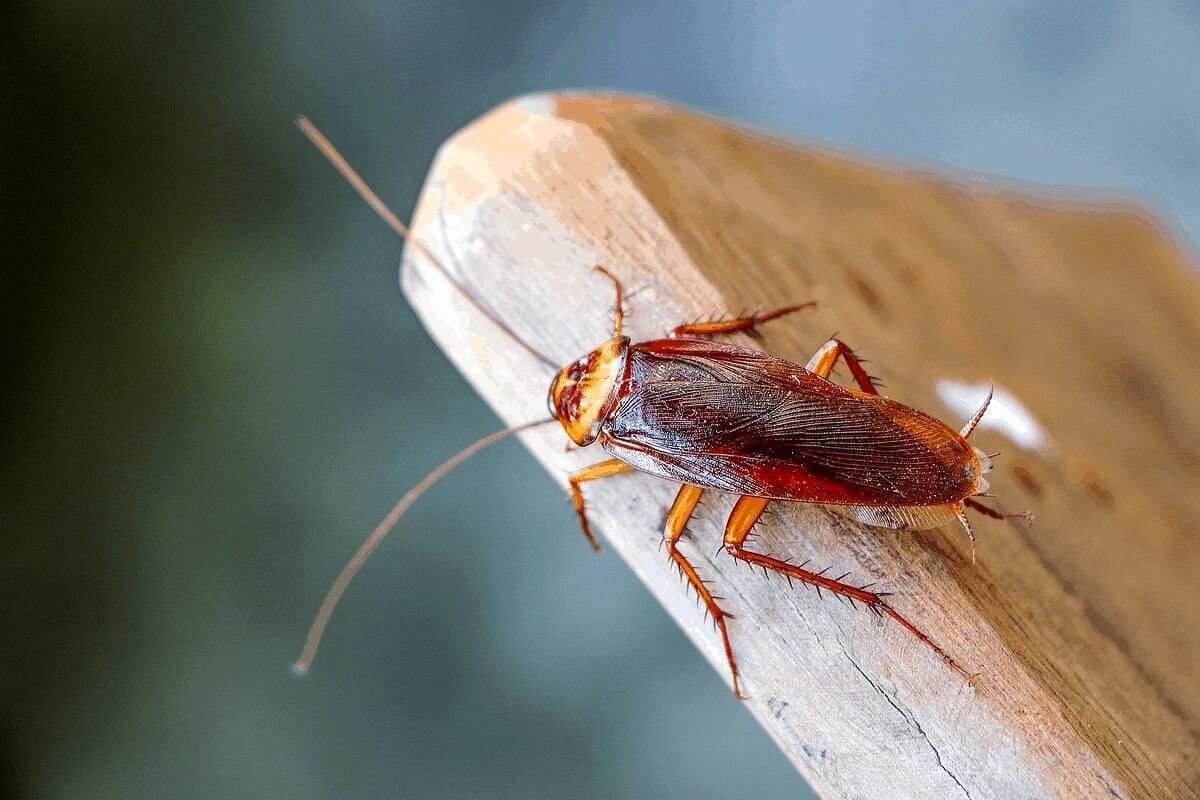
German cockroaches are small — about 1/2 inch long, light brown with two dark stripes behind the head — and live entirely indoors, in kitchens and bathrooms. They are the most common roach in apartments and homes and the hardest to eliminate because they reproduce faster than any other species. American cockroaches are large — 1 to 2 inches long, reddish-brown — and live primarily outdoors, entering homes through drains, sewer lines, and foundation cracks. They are easier to control because they do not establish indoor colonies as readily. The treatment for both is the same: gel bait, dust, and sealing entry points. The difference is that German roach infestations require more bait, more thoroughness, and more patience — because the colony is entirely inside the house.
Kill What You See Tonight. Poison What You Cannot See. Seal the Entrances Before Morning.
Getting rid of roaches overnight requires a combination of immediate contact killing and delayed colony poisoning. The pyrethrin spray kills the roaches you see. The gel bait kills the roaches you cannot see — the 80% to 90% of the colony hidden in the walls. The bait takes 24 to 72 hours to kill an individual roach and 7 to 14 days to kill the colony. You wake up to a kitchen with no roaches. Over the next two weeks, the bait finishes the job. The spray is for tonight. The bait is for the colony. Both are necessary. Neither alone is enough.
While budgeting for long-term property investments like solar energy upgrades, managing ongoing home maintenance is equally important for preserving structural integrity. Keeping your living spaces free from destructive elements supports overall comfort and helps protect interior property assets from premature wear. For property owners managing multi-family setups or older residential structures, coordinating seasonal updates alongside a professional service can address overlooked vulnerabilities. Reaching out for qualified pest control in Columbus GA helps secure common entry points and limits common household nuisances before they impact your daily living environment, contributing to a more stable and resilient household.