

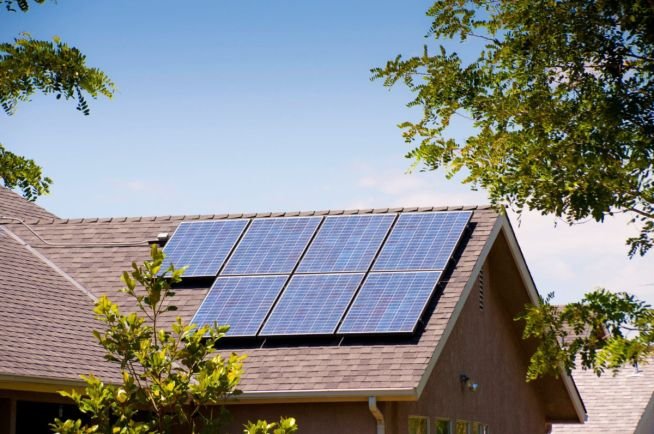
North Carolina ranks fourth in the nation for total installed solar capacity, driven primarily by utility-scale solar farms in the eastern part of the state. Residential solar has been slower to grow, but the installer market along the I-40 corridor from Raleigh through Greensboro to Charlotte is competitive enough to keep prices at or below the national average.
A typical 7-kilowatt residential system in North Carolina costs $19,000 to $22,000 before incentives. After the 30 percent federal tax credit, the net cost drops to $13,300 to $15,400. Here is the full cost breakdown, what Duke Energy customers should know, and how North Carolina compares to its neighbors.
Installed System Cost by Size
| System Size | Installed Cost (Before Incentives) | After Federal Tax Credit |
| 4 kW | $10,800–$12,400 | $7,600–$8,700 |
| 7 kW | $18,900–$21,700 | $13,200–$15,200 |
| 10 kW | $27,000–$31,000 | $18,900–$21,700 |
North Carolina prices range from $2.70 to $3.10 per watt, which is competitive with the national average. The Raleigh-Durham and Charlotte metros have multiple installers competing on price. Rural areas, particularly in the western mountains and northeastern coastal plain, may see slightly higher prices due to fewer installer options and longer travel distances for installation crews.
Where the Money Goes
A $20,000 residential solar installation in North Carolina breaks down roughly as follows. The panels themselves account for $5,000 to $6,000, or 25 to 30 percent of the total. The inverter accounts for $1,500 to $2,500 for a string inverter or $2,500 to $4,000 for microinverters. Racking and mounting hardware is $1,500 to $2,000. Balance of system including wiring, conduit, disconnects, and the electrical panel connection totals $1,000 to $1,500. Installation labor is $4,000 to $6,000. Permitting, engineering, and interconnection fees are $800 to $1,500. Sales, overhead, and installer margin round out the remaining $3,000 to $5,000.
The panels themselves are a minority of the total system cost. This is why waiting for panel prices to decline further has diminishing returns. A 20 percent reduction in panel cost lowers the total system price by only 5 to 6 percent.
North Carolina Incentives That Reduce Your Cost
The federal solar investment tax credit covers 30 percent of the total system cost with no cap. The credit applies to the panels, inverter, racking, labor, permitting, and sales tax. On a $20,000 system, the credit is $6,000. This is a dollar-for-dollar reduction in federal taxes owed, not a deduction from taxable income. Unused credit carries forward to future tax years.
North Carolina previously offered a 35 percent state tax credit that was one of the most generous in the country. That credit expired at the end of 2015 and has not been renewed. There is currently no state-level solar tax credit. Bills to reinstate a state credit have been introduced in the legislature but have not passed.
North Carolina offers a property tax exemption that excludes 80 percent of the appraised value of a solar system from property tax assessment. This is unusual. Most states exempt 100 percent. North Carolina exempts 80 percent, meaning 20 percent of the system’s value is added to your property tax assessment. In Mecklenburg County, where the combined city and county tax rate is approximately 1 percent, the 20 percent taxable portion of a system valued at $15,000 adds about $30 per year to your property tax bill. This is modest but worth knowing when comparing North Carolina to states with full exemptions.
Duke Energy, which serves most of North Carolina, has offered a solar rebate program with limited annual funding. When available, the rebate is $400 to $800 per kilowatt for residential systems. The program is subject to annual caps that fill quickly. Do not count on the Duke rebate in your financial planning. Treat it as a bonus if it happens to be available when you install. Your installer can tell you whether the current year’s funding is open.
Duke Energy Specifics: Net Metering and Rate Options
Duke Energy Carolinas and Duke Energy Progress offer full retail rate net metering for residential solar systems. Excess generation is credited at the same rate you pay for electricity, and credits roll over month to month. At the annual true-up, remaining credits are paid out at the avoided cost rate, which is lower than the retail rate. Size your system to approximately match your annual usage.
Duke Energy is actively pursuing changes to North Carolina’s net metering policy. The existing structure may transition to a time-of-use rate or a lower export credit rate in the coming years. Systems installed before any change are typically grandfathered under the existing rules for 10 to 15 years. The timing of your installation relative to potential policy changes affects the lifetime value of your system.
Duke Energy also offers a time-of-use rate option that charges higher rates during peak hours, typically summer afternoons and evenings, and lower rates during off-peak hours. Solar panels generate the most power during the daytime off-peak period. The alignment between solar production hours and lower electricity prices means a time-of-use rate may not benefit solar customers without a battery to shift generation into the higher-priced evening window. Ask your installer to model both the standard rate and the time-of-use rate before making a decision.
North Carolina vs. Neighboring States
| State | Cost per Watt | State Tax Credit | Net Metering |
| North Carolina | $2.70–$3.10 | None (expired) | Full retail (under review) |
| South Carolina | $2.60–$3.00 | 25% state credit | Full retail |
| Virginia | $2.80–$3.20 | None | Full retail |
| Tennessee | $2.70–$3.10 | None | None (no state mandate) |
South Carolina is the standout in the region. Its 25 percent state tax credit, which stacks with the federal credit, makes it one of the best solar states in the Southeast. A 7-kilowatt system in South Carolina has a net cost of approximately $11,000 to $13,000 compared to $13,000 to $15,000 in North Carolina. The difference is entirely the state credit. Tennessee has no net metering mandate, which makes solar uneconomical for most Tennessee homeowners despite similar installation costs.
Cash vs. Loan vs. Lease
Cash purchase produces the lowest total cost. You capture the full federal tax credit and all electricity savings. A solar loan allows zero-down installation with monthly payments over 10 to 25 years. Interest rates for solar loans through North Carolina installers and credit unions range from 4 to 8 percent. The monthly loan payment is typically lower than the previous electric bill, making the system cash-flow positive from month one despite the higher total cost over the loan term due to interest.
The North Carolina Clean Energy Technology Center at NC State University maintains a list of participating lenders and credit unions that offer below-market solar loan rates. State Employees’ Credit Union and Coastal Credit Union are two North Carolina-based institutions that have historically offered solar-specific loan products at competitive rates.
A lease or power purchase agreement places a third-party-owned system on your roof. You pay a fixed monthly rate. The third party keeps the federal tax credit. Leasing is most appropriate for North Carolina homeowners who cannot use the federal tax credit because their tax liability is too low. If you can use the credit, ownership through cash or a loan produces significantly higher lifetime savings.
When Solar Costs More Than It Is Worth in North Carolina
Heavy pine tree shade. North Carolina’s loblolly pines grow tall and cast long shadows. A roof shaded by mature pines for most of the day may not produce enough electricity to justify the cost. Tree removal can add thousands to the project and may require permits or HOA approval.
Low electricity usage. With rates at 12 to 13 cents per kilowatt-hour, homes with monthly bills under $90 do not save enough to recover the investment within a reasonable period.
Moving within eight years. The payback period of 10 to 12 years means you need to stay in the home long enough to reach breakeven.
Old roof. North Carolina’s hurricane and severe thunderstorm exposure shortens roof life. Replace a roof with less than 10 years remaining before installing solar. Panel removal and reinstallation for a roof replacement costs $3,000 to $6,000.
Duke Energy net metering changes before your installation. If the net metering policy changes before you install and your system is not grandfathered under the old rules, the lifetime savings are lower. This is a timing risk rather than a permanent condition.
Frequently Asked Questions
Will solar panels survive a North Carolina hurricane?
Yes, when properly installed. Solar panels are rated to withstand wind speeds of 140 miles per hour or higher. The mounting hardware is the critical component, not the panels themselves. Coastal North Carolina counties in the 120 to 140 mile-per-hour wind zone require racking systems specifically engineered for those loads. Inland counties have lower wind requirements. Confirm with your installer that the proposed racking system meets the wind load requirements for your specific county. Homeowners insurance typically covers roof-mounted solar as part of dwelling coverage. Confirm with your agent and increase your dwelling coverage limit to reflect the added value of the system.
How do I get the Duke Energy solar rebate?
The Duke Energy solar rebate is administered through approved participating contractors. Your installer submits the rebate application on your behalf. The rebate is applied as a credit to your installation cost if the contractor handles it, or paid directly to you after installation. The program operates on an annual funding cycle. Funds are allocated on a first-come basis and typically run out within weeks or months of the annual opening. Ask your installer whether the current year’s rebate funding is available before signing a contract. If funding is exhausted, you may need to wait until the next program year.
Why does North Carolina only exempt 80 percent of solar value from property tax?
The 80 percent exemption was established by the North Carolina General Assembly as a compromise between full exemption and no exemption. The remaining 20 percent is subject to standard county and municipal property tax rates. In practice, the tax impact is small. A system assessed at 20 percent of $15,000 value at a 1 percent combined tax rate adds approximately $30 per year to the property tax bill. Over 25 years, this is roughly $750, which is a fraction of the electricity savings. The 80 percent exemption is unlikely to change through legislative action in the near term.